Lud Schroedl · 15 September 2026
The Art of Keeping Money
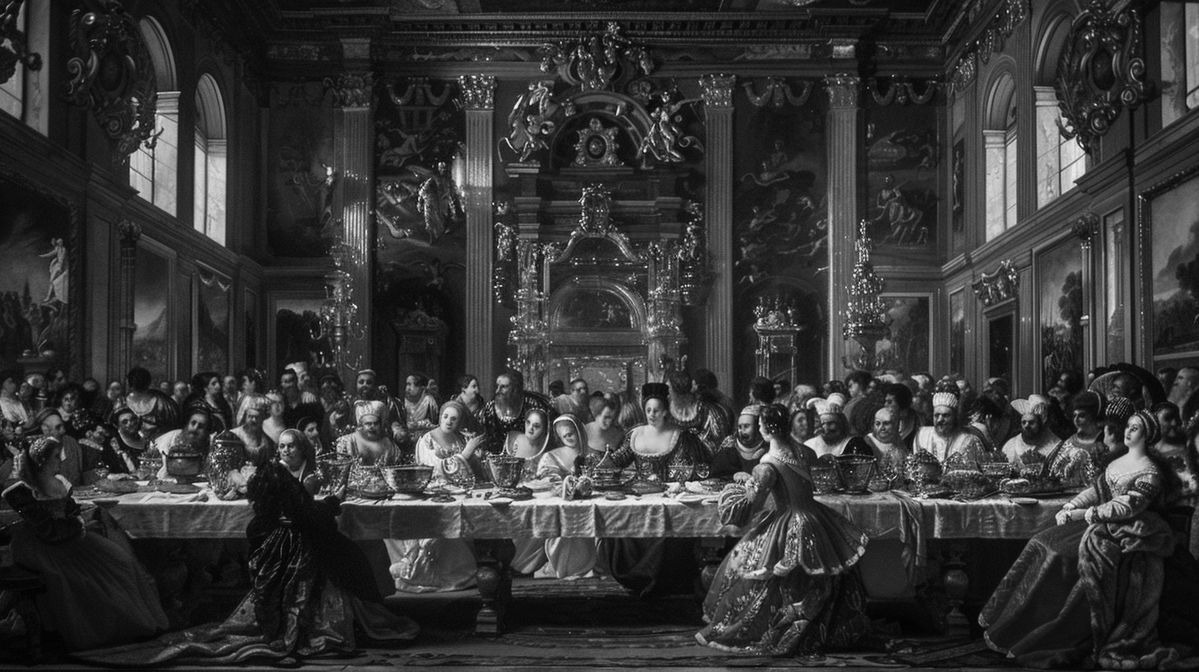
Almost everything ever written about money concerns how to get it. That is the smaller problem. Most fortunes are not taken from the men who built them. They are handed back, slowly and voluntarily, through a short list of errors that have been documented for four thousand years and are repeated in every generation because each man believes his own case is the exception.
What is at stake is not comfort. Capital is the difference between a life of obligation and a life of choice. A man who has kept what he made can refuse work, refuse partners, refuse terms, wait out a bad market, sit still for a decade, and help the people around him without asking anyone's permission. A man who has not kept it spends the rest of his life being priced by other people. The money itself is nothing. What it buys is the right to decline, and that right is expensive, non-transferable, and lost in ways that feel reasonable at the time.
Three different things wear the same clothes
Wealth is what produces while you sleep. A business, a holding, a piece of land, a body of work that pays rent long after it was made. It is older than currency and does not require currency to exist.
Money is not wealth. It is the transfer mechanism, a portable receipt for value you delivered earlier, redeemable against the future goodwill of strangers. A ticket is not the thing the ticket claims.
Status is rank. It exists only in relation to other people, which means it cannot be created, only moved from one man to another.
Wealth compounds and is positive sum. Mine does not require yours to shrink. Status is conserved and decays the moment you stop paying to maintain it. Money buys both, and it is the single unit of account in which both are denominated, which is precisely why they cannot be told apart from the inside.
Nearly every fortune that disappears does so by the same route. Wealth is converted into status, the transaction is settled in money, and the man doing it experiences the whole thing as buying an object. The receipt says car. What was purchased was rank, and rank has no residual value.
The only number that matters is the gap
Income is not a result. The gap between what comes in and what goes out is the result, and everything else in this essay is downstream of it.
The gap does its work on both sides of the equation at once. It sets how much capital you accumulate, and it sets the size of the life that capital will one day have to support. A man who earns ten and lives on eight is not merely saving. He is building a larger pile against a smaller obligation, and the two effects multiply. A man who earns fifty and lives on fifty owns nothing and needs an enormous number to ever stop.
This is why income is a poor predictor of wealth and why very ordinary earners sometimes finish well ahead of spectacular ones. Two men with identical careers, twenty years apart in outcome, usually differ in this one variable and in nothing else.
Nobody is taught this, because the people who sell things prefer you to think in flows and the people who lend prefer it even more.
Take your share first
The oldest written advice on this subject is also the most useful. A fixed part of everything you earn is not income at all. It is yours, removed before anything else is paid, and it never enters the account you live from.
The mechanism matters more than the fraction. What stays visible gets spent. What is moved out on the day it arrives is never argued with, and the argument is the whole danger, because it is conducted by a man who wants the thing and knows every one of your weaknesses.
The rule earns its keep at the good year, the bonus, the sale, the inheritance. Decide the fraction before the money arrives. You will not decide it well afterwards. And after any sum that is large relative to your history, buy nothing significant for twelve months. What feels urgent in the first weeks after a windfall almost never survives to the end of the year, and the things bought in that period are the ones men describe later with a particular kind of embarrassment.
The purchase is never the object, it is the level
There is an old story about a man who began to do well, and whose wife bought a sofa. When the sofa arrived the chairs no longer matched, so chairs were bought to correspond. Then the tables, the carpets, the sideboards. Then the house itself was too small and too plain for the furniture standing in it, so a larger house was built, and with the house came servants, a carriage and the annual cost of keeping an establishment. His own accounting, years later, was that the sofa had cost him millions of dollars.
Nobody in that story ever decided to buy a house.
Large expenditure is rarely a decision about a thing. It is a decision about a level, and the level then invoices you in instalments, each of which is reasonable on the day it falls due. By the time the pattern is visible, unwinding it costs more than the original purchase ever did, and it costs it in public.
There is a second mechanism underneath, and it is biological. You experience change, never level. Any improvement in circumstances is absorbed within about a year and becomes the new floor, delivering nothing further. This is fatal for spending and excellent for restraint. The same adaptation that makes an upgrade worthless within a year makes its absence painless within a year. Almost everyone runs it in the wrong direction.
Status is a game with a fixed pot
Because rank is conserved, one man rising is one man passed. The game has no terminal state, no amount that ends it, and no level at which the ranking stops being recalculated. Worse, the price is set by other people. Whatever the man above you is willing to spend becomes the entry fee, forever, and he is not consulting you about it.
There is a further problem that is specific to our era and will outlast it. Display used to carry information. When a visible purchase had to be settled out of accumulated capital, treating it as evidence was rational. Instalment credit severed the signal from the balance sheet behind it. Anything that can be financed proves nothing, and everyone knows this now, including the audience it is aimed at. The purchase still costs the full amount. It no longer delivers the standing. It is the worst available trade and it has never been more popular.
And it has a tail. Visible wealth does not buy admiration, it buys a queue. Once it is known what you have, there is a permanent line of claims on it, some of them affectionate, and the rate at which you will be asked was set by the things you chose to display. Unlike the object, the rate does not depreciate.
The test I use is whether I would still want the thing if nobody could ever know I owned it. Almost nothing survives the question. What does survive it, I buy without negotiating.
The three old ways to lose it
There is a saying that money is lost in three ways: with women, which is the most pleasant, at cards, which is the fastest, and by speculating in things one does not understand, which is the stupidest. It has survived because it is complete.
The first is not a warning about women. It is a statement about concentration. Choosing a partner is the largest capital decision most people ever make and the only one taken with no analysis whatsoever. It is a merger, entered without diligence, on terms written by a legislature you have never met, with a counterparty you cannot diversify. Choose slowly, agree the terms while both parties are well disposed toward each other, and then stop calculating and live. Nothing else in this essay can offset getting this wrong, and nothing else in life is worth more when it is right.
The second is any repeated bet with negative expectation. The edge against you can be very small, because the number of repetitions is large and time is patient. The reliable tell is entertainment. Anything engineered to be exciting has been engineered to extract, and if you cannot state precisely where your advantage comes from, you are not the player, you are the product.
The third is speculation dressed as investment. The distinction has nothing to do with the asset and everything to do with whether you can explain the mechanism by which the thing will be worth more. Without that, you are holding a lottery ticket with a story attached, and the story is the part that was sold to you.
Never stake what you have for what you do not need
Losses are not symmetric with gains. Building is additive. Losing is multiplicative, and nothing survives multiplication by zero.
So the discipline is not about maximising returns. It is about removing the zeros from the expression. Positions that can end you while you sleep. Obligations that can be called at the worst possible moment. Any arrangement in which one counterparty, one bank, one jurisdiction or one asset is capable of finishing the game. A loss you can absorb is tuition. A loss that ends you is not a loss, it is an exit, and there is no subsequent round in which the lesson gets applied.
Borrowed money is the only reliable way a solvent man goes broke. With leverage, being right too early is indistinguishable from being wrong, because the position is closed by someone else before the thesis matures. A river with an average depth of four feet will still drown you at the middle.
Stay inside what you know, and pay for counsel that carries consequences
A man gives his savings to a brickmaker who has been persuaded to travel and buy jewels, and the brickmaker returns with coloured glass. The point is not that he was cheated. It is that he took advice on gems from a man who knew bricks.
The expensive pattern is this: money accumulates where a man has genuine knowledge and is then deployed where he has none. The first cheque is modest. The second is required to protect the first. The tell is that he describes the new venture entirely in someone else's vocabulary.
Take counsel only from people who have actually done the thing and who carry consequences if they are wrong. Free advice is the most expensive kind available, because the man giving it keeps none of the outcome. Pay properly for the few opinions that matter and ignore the rest, including the confident ones, particularly the confident ones.
Compounding is the only machine, and interruption is its only enemy
Compounding is flat for a long time and then it is not. Most of the final result arrives in the last few doublings, which means the terminal value is dominated by years that have not happened yet.
Everything follows from that shape. An interruption does not cost you the years you lost. It costs you the largest doublings at the end of the series, which is why survival beats brilliance and why an ordinary return held for forty years beats a superior one held for twelve. It is also why the flat stretch destroys so many people. The early years look like evidence the thing does not work, and they stop just before the arithmetic turns.
The leaks are all forms of activity: trading, switching, fees, taxes crystallised early, and the restlessness that produces all three. Buy things that produce, buy them at prices that do not require optimism, and then leave them alone for longer than feels comfortable. Buy good assets, take something to help you sleep, and look again in ten years. The waiting is not the interval between the decisions. The waiting is the work.
Holding cash is not the same as keeping wealth
Money melts. It is engineered to melt, slowly, by institutions that will outlive you and are not accountable to you.
The miser makes the mistake that looks like prudence: he protects the number and loses the wealth. There is an old warning that excessive economy is the first visible sign of a ruler in decline, and the same is true of a household. Preservation is not a storage problem. It is a rate problem, and the only solution is to own things that produce.
Which means volatility must be accepted as the toll. Volatility is not risk. Risk is permanent loss of capital, and the two are confused constantly, usually by people about to convert the first into the second at the bottom of a cycle.
Concentrate to build it, spread it to keep it
The strategy that creates a fortune is the wrong one for holding it, and almost nobody makes the switch.
Concentration creates, because whoever is best at a thing captures most of what it pays, and there is no route to being best across four projects at forty percent each. Diversification preserves, because it is constructed so that no single outcome is decisive, which is the exact property you do not want while trying to produce one.
The day the fortune exists, the objective function changes. It stops being maximum growth and becomes minimum probability of zero. Failing to notice that moment is the most common way a large amount becomes a small one, and it is always explained afterwards as bad luck.
Keep your fixed costs low enough to say no
Every recurring obligation is a short option written against your own judgement.
A man with a high base cannot decline a mediocre deal, because he needs the proceeds. He will describe this as being pragmatic. He is being bid for, and the price was set months earlier by a decision that felt like nothing at the time. The lower your obligations, the longer you can wait, and waiting is where most of the money has always been.
This is the real function of frugality. It has almost nothing to do with the sums saved, which are trivial against the sums at risk in one bad decision. It preserves the capacity to refuse, and refusal is the entire skill.
Say little
Known money attracts claims, prices, lawsuits, proposals and partners. It changes the number you are quoted and the tone in which you are asked.
Say nothing about what you hold, what you made, what you intend or what you lost. No one in history has been damaged by being thought poorer than he is.
Give or refuse, but do not lend
A loan inside a family is the purchase of resentment on instalments. Decide whether the money is a gift, give it as one and never mention it again, or decline plainly at the start.
Guarantee nothing you cannot afford to lose entirely, regardless of who is asking and regardless of how sound the arithmetic looks. The danger is not the first guarantee, which is usually repaid. It is that money obtained too easily changes the man who obtains it. What arrives at no cost is not valued, and what is not valued is risked.
The accounts that cannot be refilled
Compounding requires the man to still be present and still be sharp at the far end of the series, which means health and attention are financial assets and should be managed as such.
The direction of economy matters more than its intensity. Overpay without hesitation for anything that protects your capacity or buys back your time. Underpay for anything whose only function is to be observed. The expenditure with the highest return is almost always invisible, and the expenditure with the lowest return is the part everybody can see.
Honesty lowers your cost of operation
Reputation accumulates slowly through unremarkable consistency and collapses discontinuously through single events. Given that shape, the correct strategy is not to maximise good impressions. It is to minimise variance, and most of the value sits in things not done.
There is a second return that is rarely mentioned. Maintaining two versions of the same situation consumes attention continuously, and the cost rises with the number of people holding each version. One story is cheap to run. The alternative carries an operating expense, drawn on the account that cannot be refilled.
And there is a third, which is purely commercial. Long games are played with the same small number of people over decades, and those people show their best opportunities first to the man they do not have to check. That advantage is unpriced, invisible and enormous.
Know what it is for
Without a stopping rule, no amount is sufficient. Every gain gets re-risked, because the only measure available is the man ahead, and there is always a man ahead. Decide what constitutes enough while you are still far away from it, when the number can still be set honestly.
The purpose is narrow and worth stating plainly. Money kept buys three things: the ability to say no, the ability to wait, and the ability to help without diminishing yourself. A rich life is to need help from nobody and to be able to give it. Everything spent to be seen buys none of the three and costs all of them.
One last thing, which is the reason any of this deserves to be written down. Capital passed to someone who never learned to produce it will be returned to the world. This is a mechanical outcome. What can actually be inherited is the method: the gap, the patience, the refusals, the willingness to be thought poorer than you are.
What survives you is not the money. It is whether the people who receive it understand what it cost.